
Dolomites
Are you planning an active summer vacation and looking for inspiration what to do in Dolomites? Then you will find my article today with verified tips for the Dolomites from recent years useful. It’s no secret that Italy is one of our favorite countries, which we visit really regularly. Italy makes us happy. On the one hand, it is the diverse nature that takes your breath away literally at every step, and it doesn’t matter whether you go to the mountains, to the lakes, or to the sea.
Lago di Carezza / Dovolenkářka
At the same time, it is the local Italian cuisine, which is also more than friendly to us, celiacs. I won’t deny that although most of our holidays are very active, we always return from Italy with a few extra kilos. Of course, also with a suitcase full of Italian (mainly) gluten-free goodies. Today, however, I will not rave about food here, we will leave that for another article.
Today we are going on the most popular trips in the Dolomites. Don’t worry, most of the trails described in today’s tips are relatively easy and no climbing experience is needed. You can get by with normal physical fitness and quality mountain equipment in the form of sturdy hiking boots and breathable clothing. A waterproof lightweight jacket should also have a place in your backpack.
Trips in Dolomites / What to do in Dolomites
Seceda
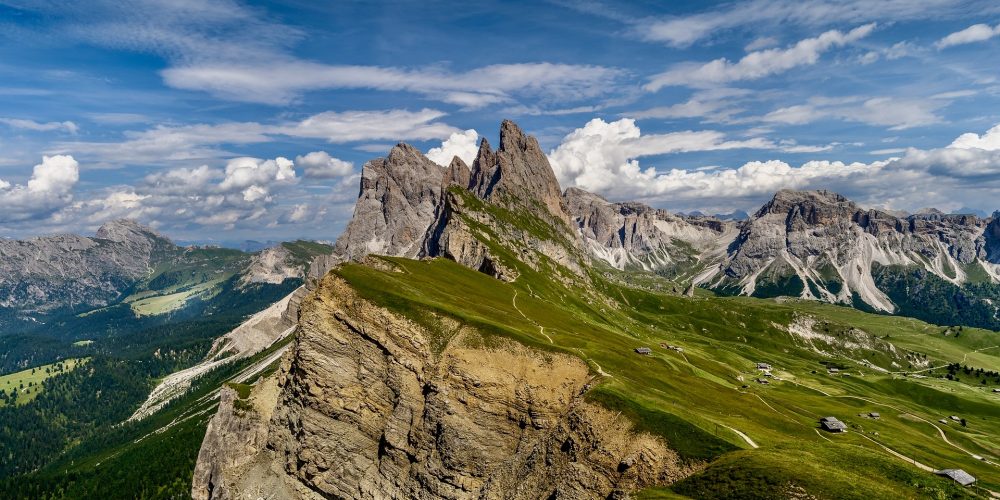
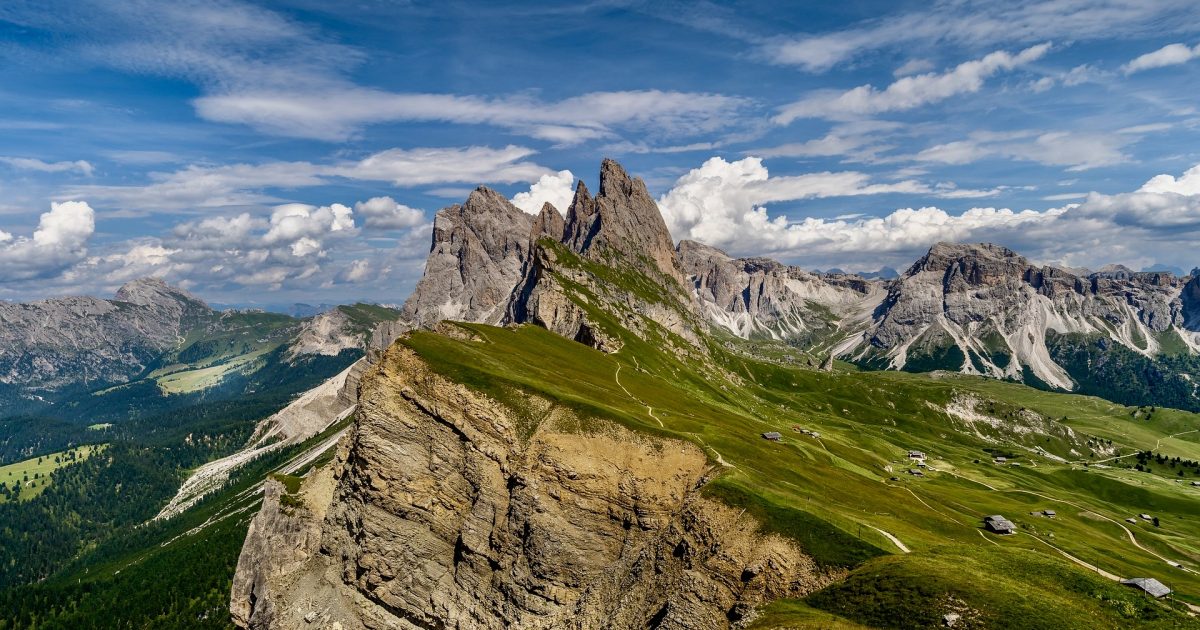
I believe that I don’t need to introduce the Seceda peak to many of you anymore. You have certainly seen a photo from this fairytale mountain place on social media. Although this place is well-known, if you go on a trip outside the main holiday months, you shouldn’t encounter too many tourists.
The Seceda peak in the Italian Dolomites is one of the most photogenic trips in the Dolomites, and in good weather you will certainly take away a pleasantly unforgettable experience from here. The ideal starting point is the town of Ortisei, where I recommend staying and from where you can comfortably get by the Ortisei-Furnes-Seceda cable car directly to the plateau. Another option is to park directly at the bottom station of the cable car if you are staying elsewhere.
Alpe di Siusi
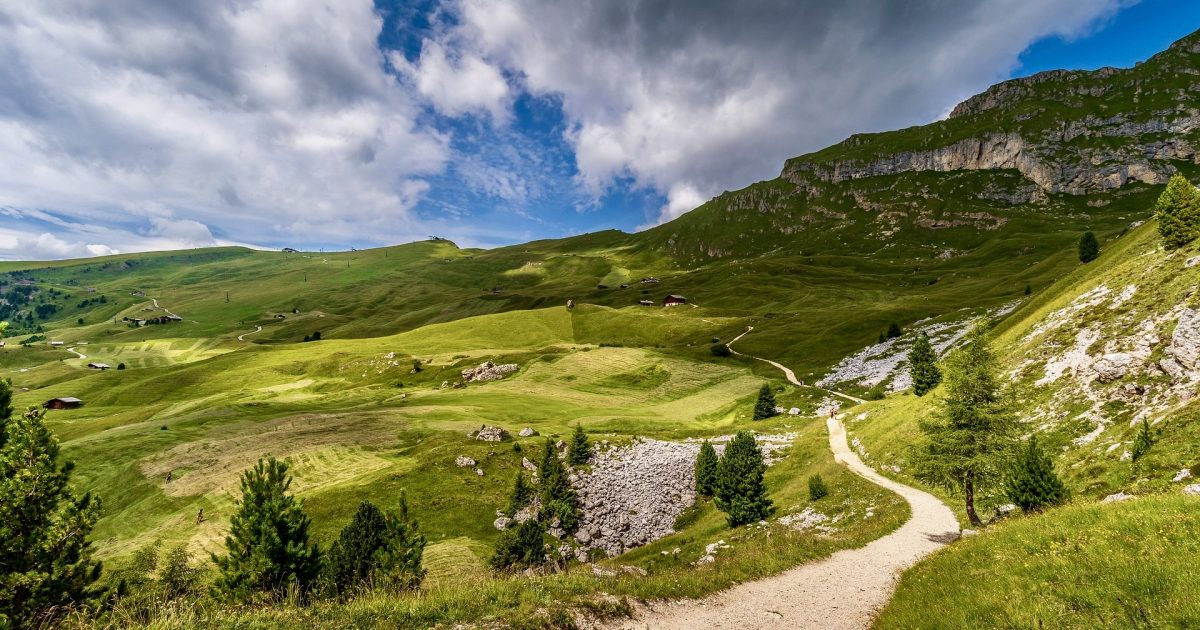
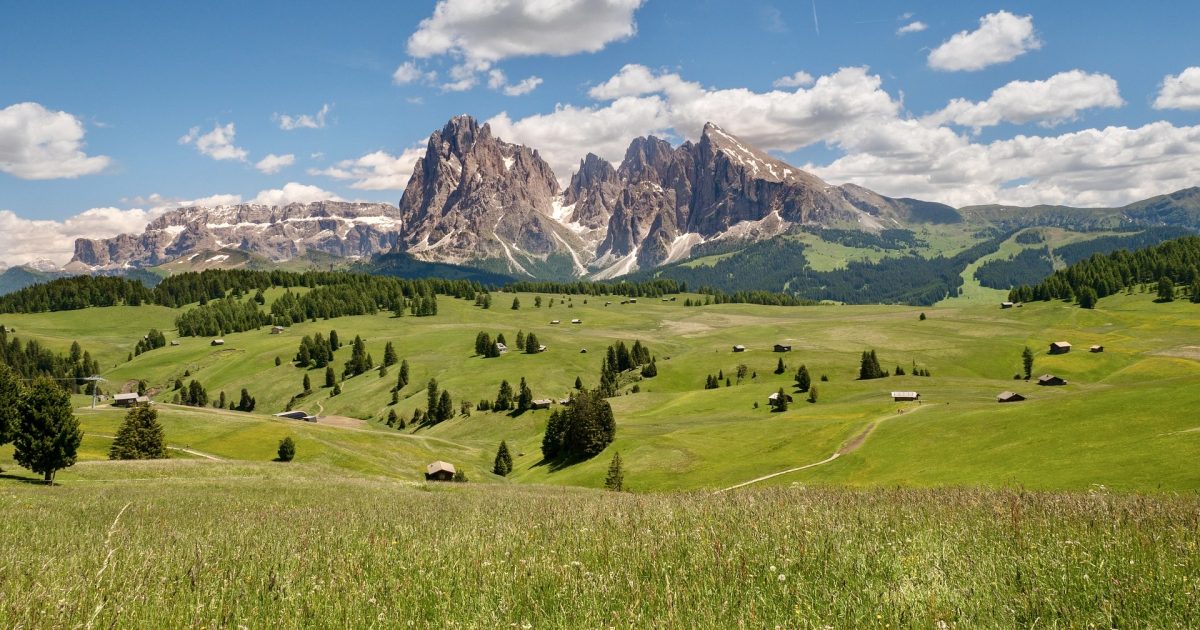
Alpe di Siusi (Seiser Alm) is the largest high-altitude meadow in Europe, offering breathtaking views of the Sassolungo, Sasso Piatto and Schlern massifs. The best starting point is the town of Seis am Schlern, from where the Seiser Alm Bahn cable car will take you directly to the plateau. If you arrive by car, I recommend parking in Seis, because access to Alpe di Siusi is limited for private vehicles during the day.
Hiking trails on Alpe di Siusi here have varying degrees of difficulty, from easy walks between pastures to a climb to the top of Monte Pana with an elevation gain of around 500 meters. Personally, we prefer this place for those comfortable, easy walks around the local pastures, which undoubtedly belong to the most popular trips in the Dolomites. Therefore, we include among the main attractions traditional mountain huts, where you can enjoy typical South Tyrolean specialties, or iconic, photogenic, wooden buildings scattered around the meadows, which create a fairytale atmosphere.
In summer, the area is a paradise for hiking and cycling, and Seis am Schlern or Ortisei are great choices for accommodation, from where Alpe di Siusi is easily accessible by cable car and bus.
Val di Funes Valley
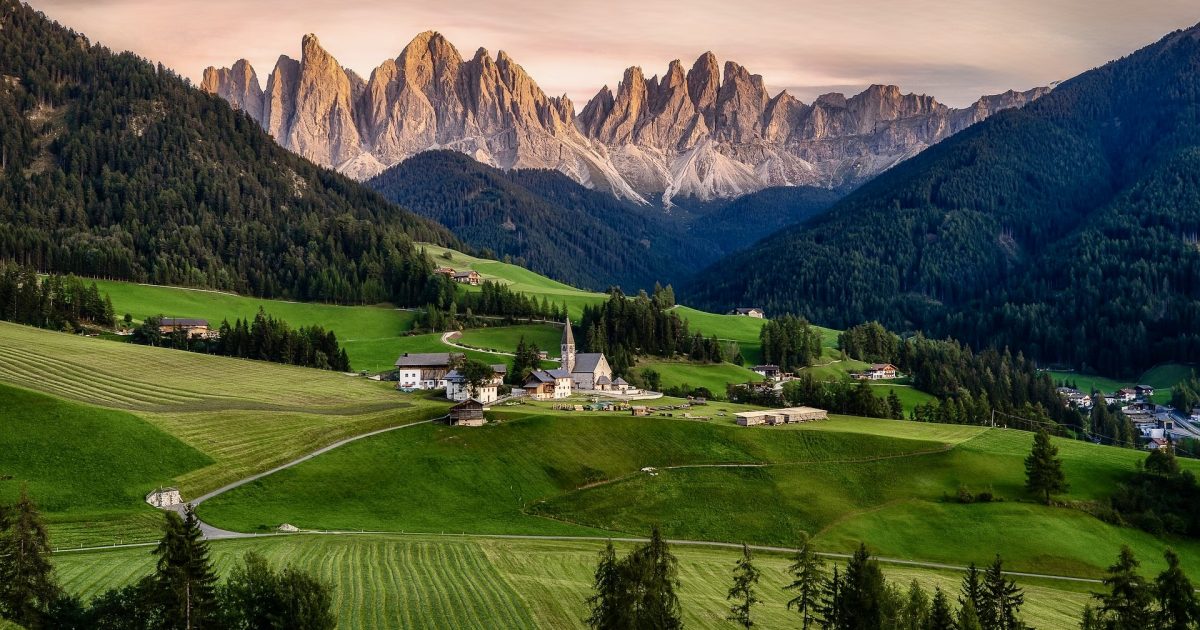
Val di Funes is one of the most picturesque valleys in the Dolomites, famous for its views of the Odle massif and charming mountain villages. The ideal starting point is the village of Santa Maddalena, which can be easily reached by car and breathtaking views of the mountain landscape with the iconic church await you here. You will find the view of the iconic Chiesa di Santa Maddalena church on the hill above the village.
You can park in designated parking lots – the parking lots are well described on the map. Another interesting place is the picturesque church of San Giovanni in Ranui, which is one of the most photographed places in the Dolomites. For accommodation, it is ideal to look towards Brixen. From Brixen it will take you about 30 minutes by car. Accommodation directly in the villages around the most popular viewpoints is usually booked early or disproportionately expensive.
Lago di Braies – Dolomites
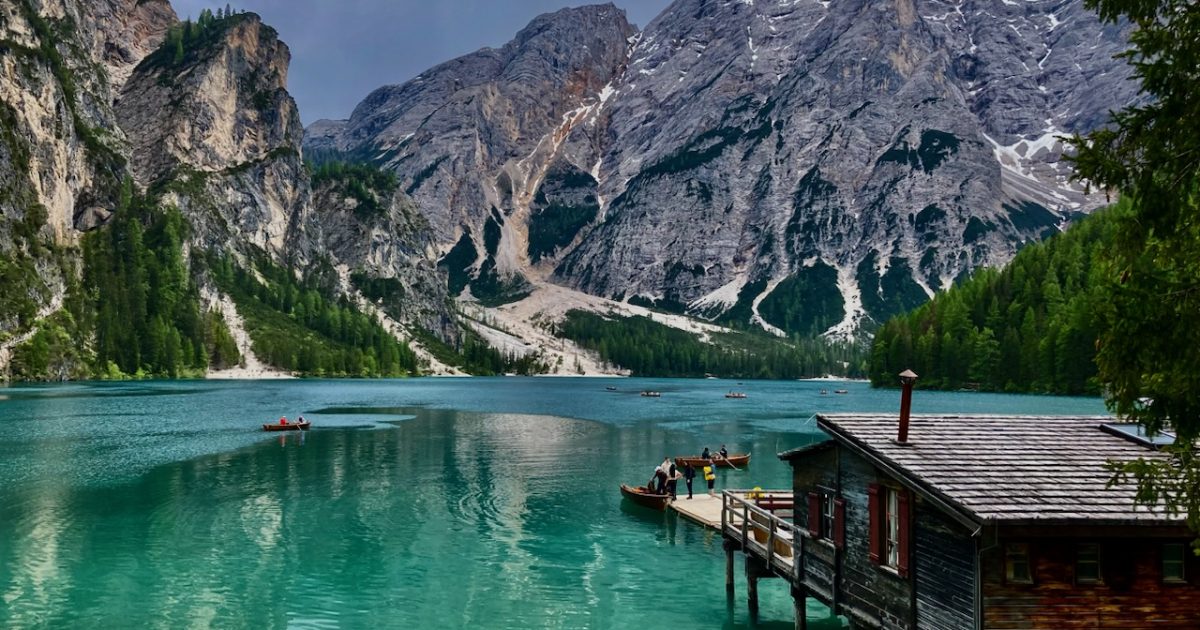
Lago di Braies is one of the most famous trips in the Dolomites and although you most likely won’t be alone here, I definitely recommend visiting this mountain lake at least once in your life. I’m sure you’ll agree that it’s worth seeing. The circular trail is not difficult and you can manage it even with active children. You can only go around part of the trail with a stroller (there are stairs and narrow terrain in one part), if you want to walk the entire trail around the lake with a toddler, pack a baby carrier for your vacation.
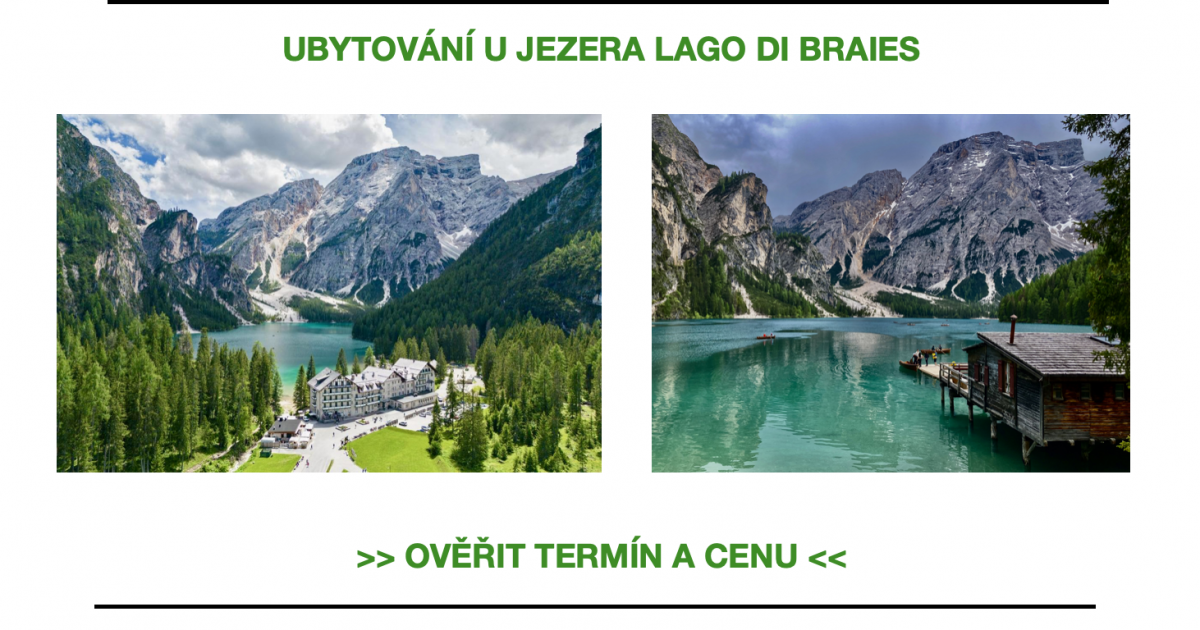
Attention! During the summer, entry to the upper parking lot is only allowed with a permit, which must be requested in advance. One option is to book accommodation in the historic Hotel Lago di Braies. A stay in it is an experience in itself.
From 10.7. to 10.9.2025 you can only get to the Pragser Tal valley between 9:30 a.m. and 4:00 p.m. by public transport, on foot, by bike or upon presentation of an online – reservation or valid transit permit.
For a comfortable visit during public holidays, such as Easter, Liberation Day and Labor Day, we recommend using public transport.
Otherwise, you can reserve parking space P1 in advance on these days and use the shuttle service to the lake:
19.04. – 20.04.2025
25.04. – 27.04.2025
01.05. – 04.05.2025
I also recommend reading the separate article that I wrote about the trip to Lago di Braies:
- Trip to Lake Lago di Braies – circular trail, parking and accommodation
- Accommodation in the historic hotel at Lago di Braies – SHOW PRICES
Lago di Braies / dovolenkarka.cz
Lago di Carezza
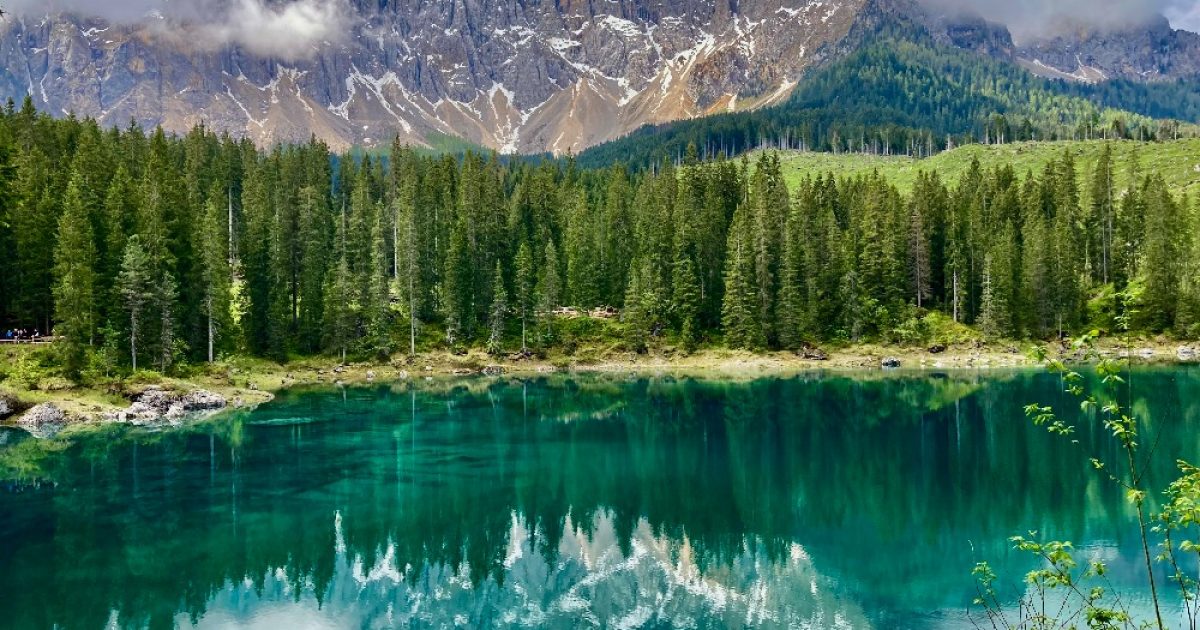
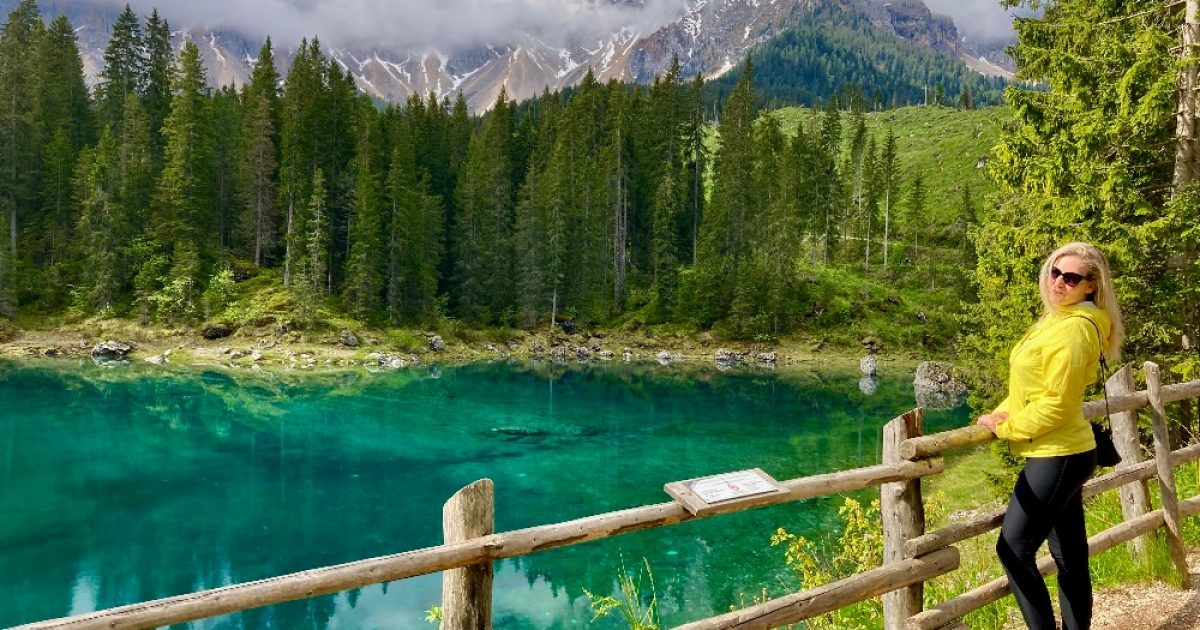
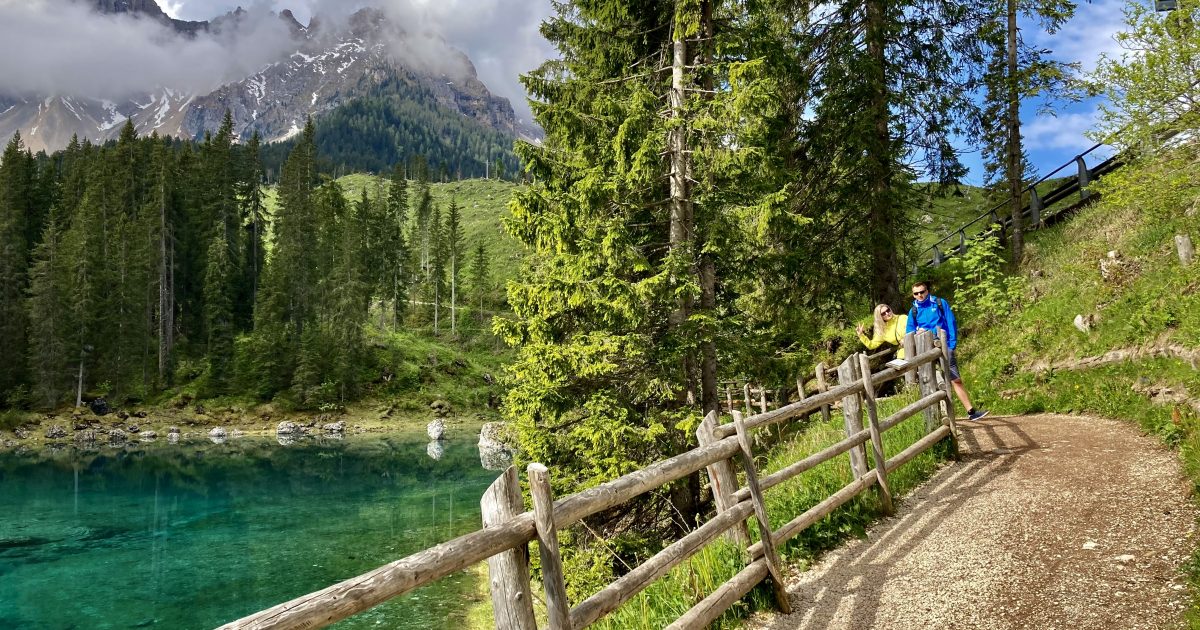
You definitely shouldn’t miss Lake Lago di Carezza, and I like to say that it is one of those trips in the Dolomites that really everyone can go on. There is a paid parking lot a short distance from the lake, from which you can reach the lake via a comfortable underpass. This trip won’t take you much time (unless you go on a more challenging hike further into the mountains), so you can include it in your itinerary as a supplement when traveling to other places.
We visited Lago di Carezza in the early hours of June and it was definitely a good choice. The parking lot was almost empty and only a few tourists walked around the lake with us. We practically had most of the trail and the viewing terrace to ourselves. You can easily go around the trail with an outdoor stroller.
Get inspired by my separate article on Lago Di Carezza, where you will also find more photos of this fairytale place to get a better idea:
Lago di Carezza / Dovolenkářka
Trips in the Dolomites – Lago di Sorapis
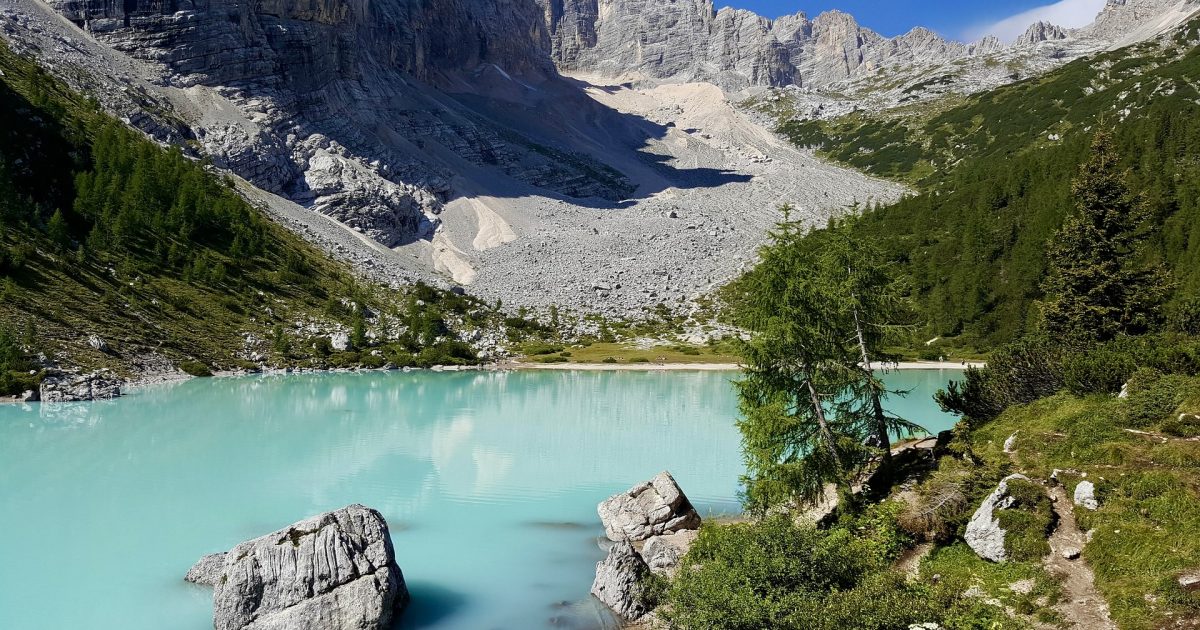
If you are physically fit, you should not miss the fairytale mountain lake Lago di Sorapis among the trips in the Dolomites. The hike to Lago di Sorapis, one of the most beautiful turquoise milky lakes in the Dolomites, starts at Passo Tre Croci, a mountain pass between Cortina d’Ampezzo and Misurina.
The route follows trail no. 215 and is approximately 12 km long (there and back) with an elevation gain of around 450 meters. I consider the difficulty to be medium. Although the climb is not extremely steep, some narrow sections with secured sections and rock stairs require you to have a sure step and sturdy shoes. I would definitely not go on this trip in rainy weather, or after several rainy days, when you could easily slip here.
The entire circuit takes approximately 3.5 to 5 hours, depending on fitness and the number of stops for taking photos. The car can be left in the parking lot directly at Passo Tre Croci, from where you set off on foot. Cortina d’Ampezzo is ideal for accommodation, offering a wide range of hotels and apartments and a great atmosphere of a mountain town. Keep in mind that accommodation prices here are not among the cheapest. If you are looking for cheaper accommodation, I recommend going here just for a trip.
Summer Kronplatz
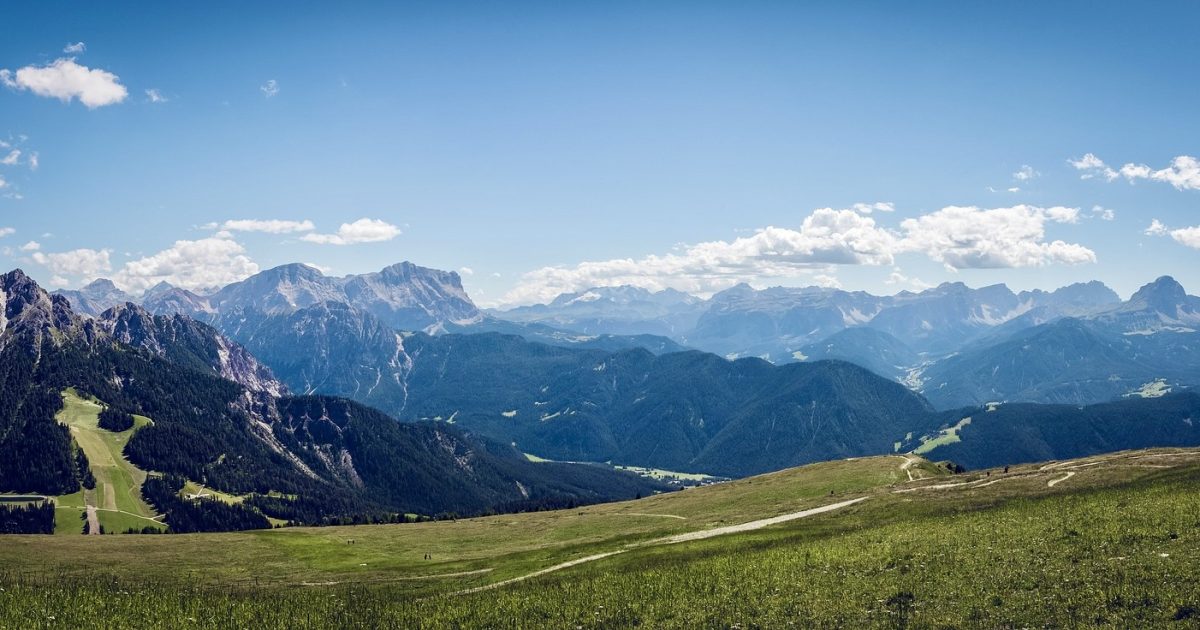
Summer Kronplatz and then summer Anterselva are two relaxing trips in the Dolomites for me, which you would probably expect in the winter list of where to go here. However, I dare say that many of you will be thrilled by these places even in the summer season and maybe you will like the Dolomites as much as we do. In winter, Kronplatz is our certainty, and in summer you can also climb this popular hill and enjoy these 360-degree views of the surrounding mountain nature in good weather.
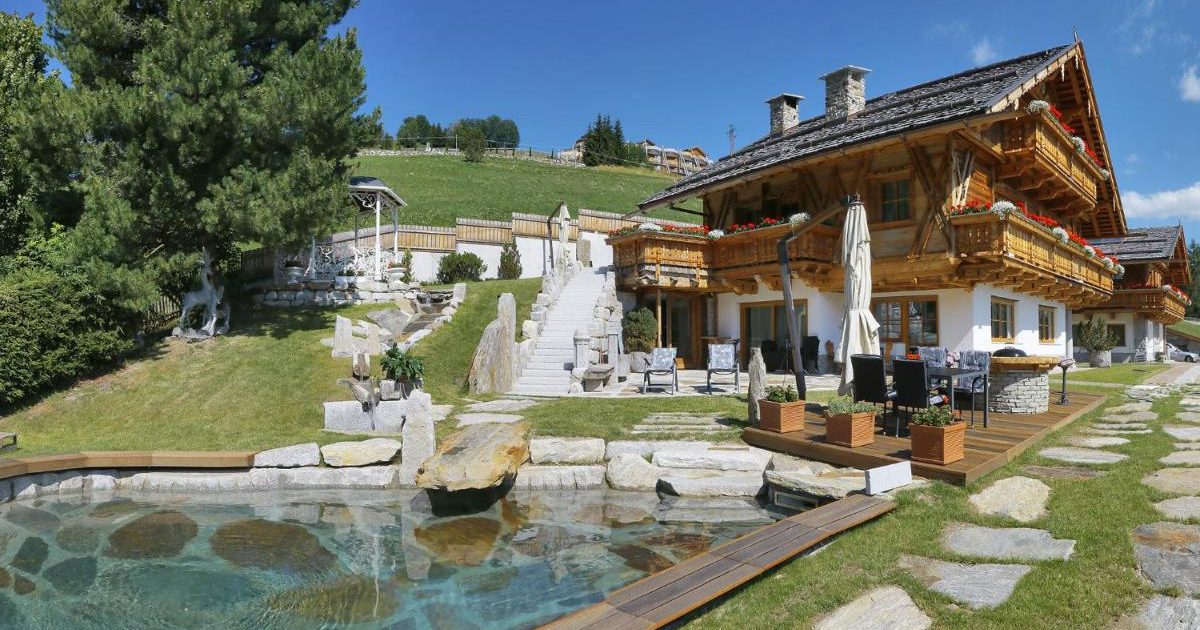
I recommend staying, where else but, in Valdaora:
Summer Anterselva / What to do in Dolomites
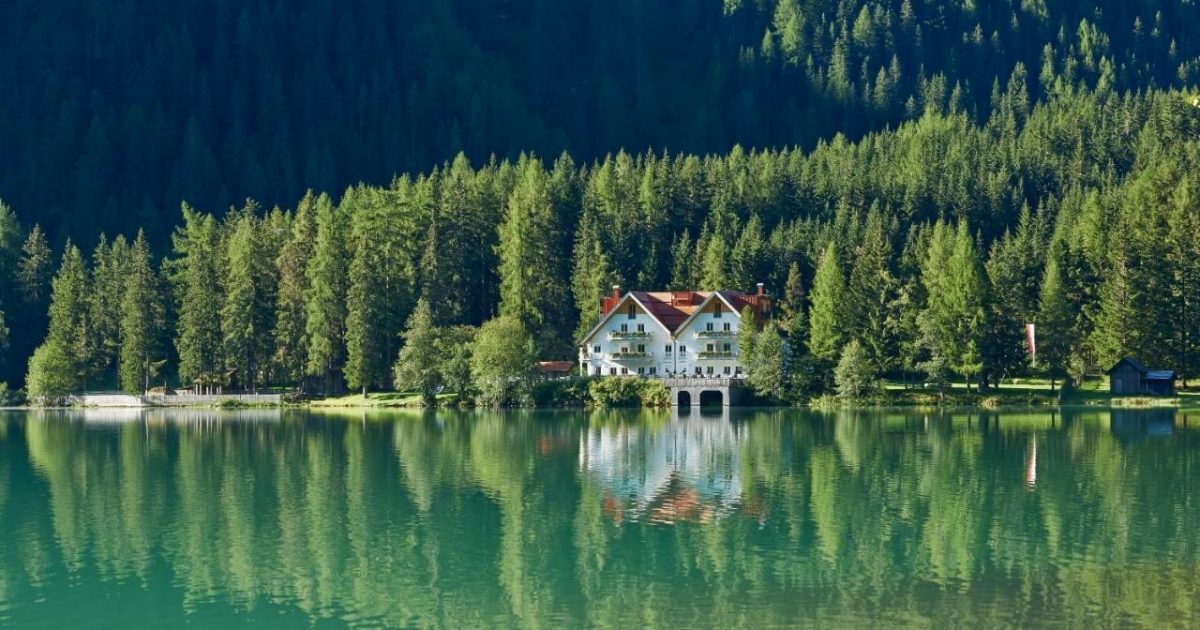
Are there any biathlon fans here? If you also follow our biathletes at the World Cups, then you will surely remember that the weather in Anterselva is almost always beautiful and I dare say that the same applies to the summer season here. In addition to the fact that it is a short distance from here to Kronplatz and also to Lake Lago di Braies, you can go directly here to the lake of the same name Anterselva, or choose one of the comfortable and challenging trails, further into the mountains.
Locals say that their Lake Ansterselva is more beautiful than the tourist-besieged Lago di Braies. I’ll leave the judgment to you. In any case, this place is one of the others that definitely must not be missing from our list for trips in the Dolomites.
I recommend staying right by the lake with breathtaking views directly from the hotel. There is also a well-rated restaurant here. So I wouldn’t be surprised if you didn’t want to leave from here. I believe that the Dolomites will win you over too.
> SHOW ACCOMMODATION PRICES AT HOTEL ANTERSELVA
View of Cadini di Misurina / What to do in Dolomites
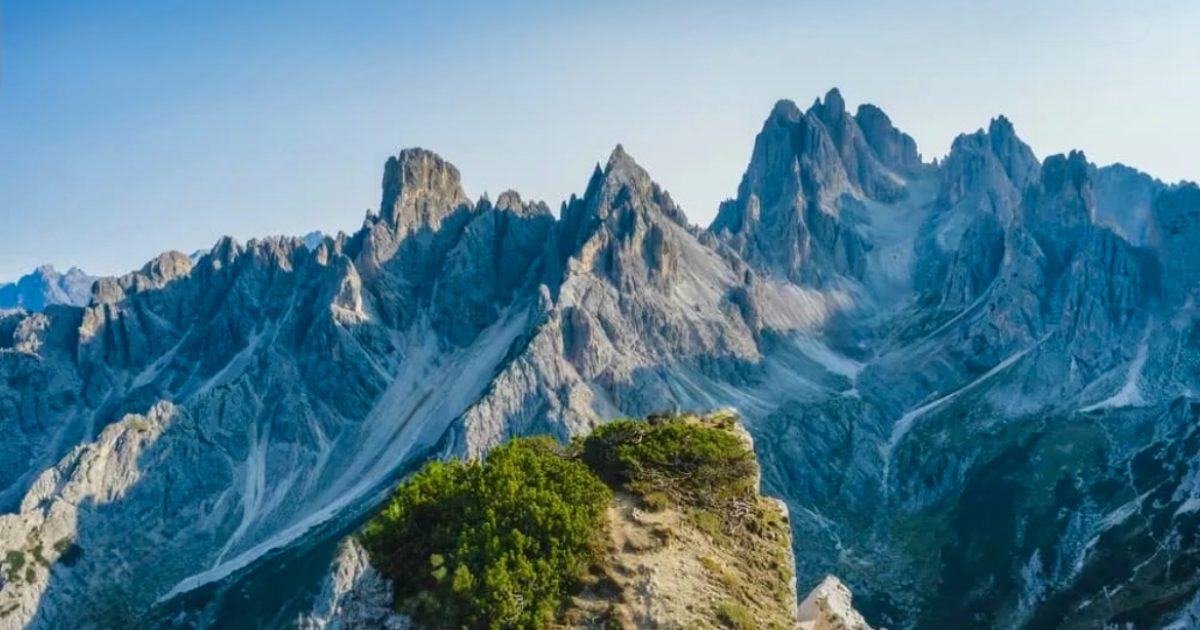
The view of Cadini di Misurina offers one of the most dramatic views of the majestic peaks of the Dolomites. The starting point is the parking lot at the Rifugio Auronzo hut, which can be reached by a toll road leading from Misurina. From there, a relatively easy trail no. 117 leads, which gently climbs along the mountain ridge.
The route is approximately 2.5-3 km long (there and back) with an elevation gain of around 150 meters, so most tourists can handle it, but it is still necessary to have sturdy shoes and be careful on narrow sections with a steep slope. The climb takes about 1.5-2 hours, including time for admiring, but we know each other with those photo stops, right?
Parking is possible directly at Rifugio Auronzo, although it is usually full early in the season. Misurina or Cortina d’Ampezzo are ideal for accommodation, from where you can get here in a short drive. As far as the toll road and parking are concerned, the more popular this view, Lake Misurina and other trails are, the more difficult it is (not only) in good weather to park here (or even get here at all).
- The road opens at 7:00 a.m. and the toll is 30 EUR
If you don’t want to stress about whether there will be space for your car:
- From the end of June to the beginning of October, bus 444 runs from Dobiacco/Toblach to Rifugio Auronzo, with a reservation required between July 10 and September 10: drei-zinnen.bz/en/ticket
- This way you can connect to bus 444 from other places where you are staying, e.g. from Cortina – we have not tried this route, I recommend finding out the connecting buses directly at your accommodation
- I strongly advise against going to the end of the lookout – of course, there will usually be a queue for taking photos at the end of the promontory, but I personally recommend taking advantage of the fact that it is your turn and taking a photo of the lookout without people, rather than risking a possible rockslide
Lago di Misurina / Trips in Dolomites
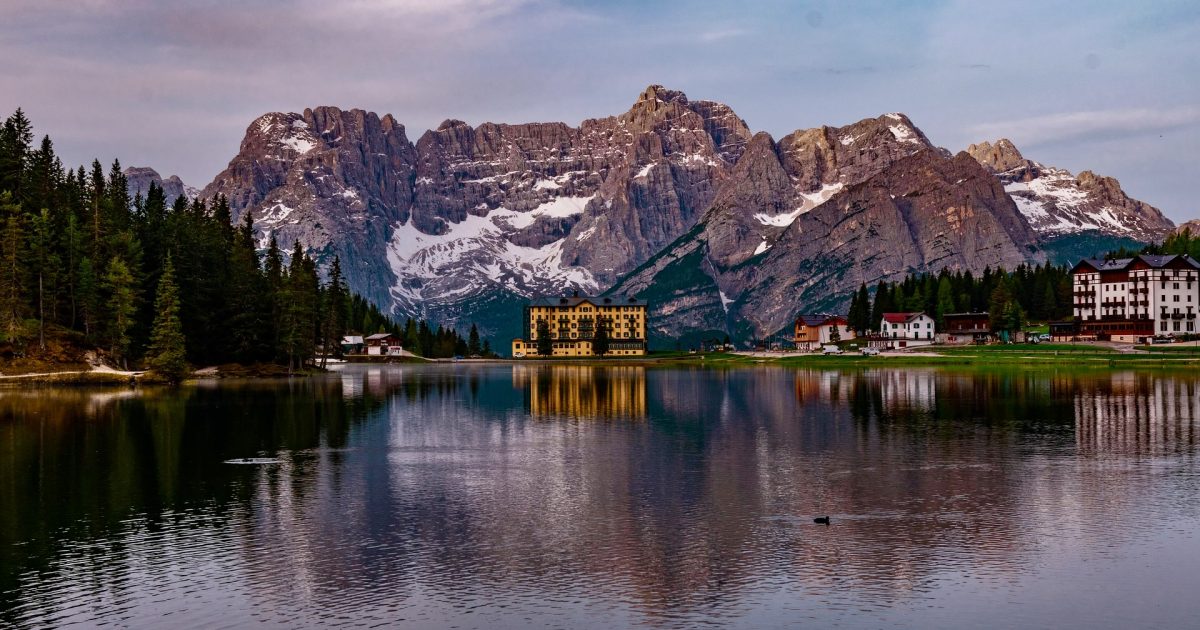
Lago di Misurina is a picturesque mountain lake lying at an altitude of 1,754 meters, surrounded by the majestic peaks that the Dolomites boast. The ideal starting point is Misurina itself, which can be reached by car or bus from Cortina d’Ampezzo. It can also be a basic starting point for your other trips – to the Cadini di Misruina lookout and e.g. also to the trip to Tre Cime di Lavaredo.
An easy trail leads around the lake, which everyone can handle. It is more of a comfortable walk than a challenging climb. If you are looking for parking, the best choices are places directly by the lake or in the surrounding accommodation facilities.
The lake is shrouded in a legend, according to which a beautiful girl Misurina once lived here, who wanted a magic mirror that could see into people’s hearts. Her father, King Sorapiss, obtained it for her, but the price was high, in exchange he turned into a mountain and his tears created the lake. Today you can enjoy not only a wonderful view of the Tre Cime di Lavaredo massif, but also a peaceful atmosphere ideal for relaxation.
Tre Cime di Lavaredo
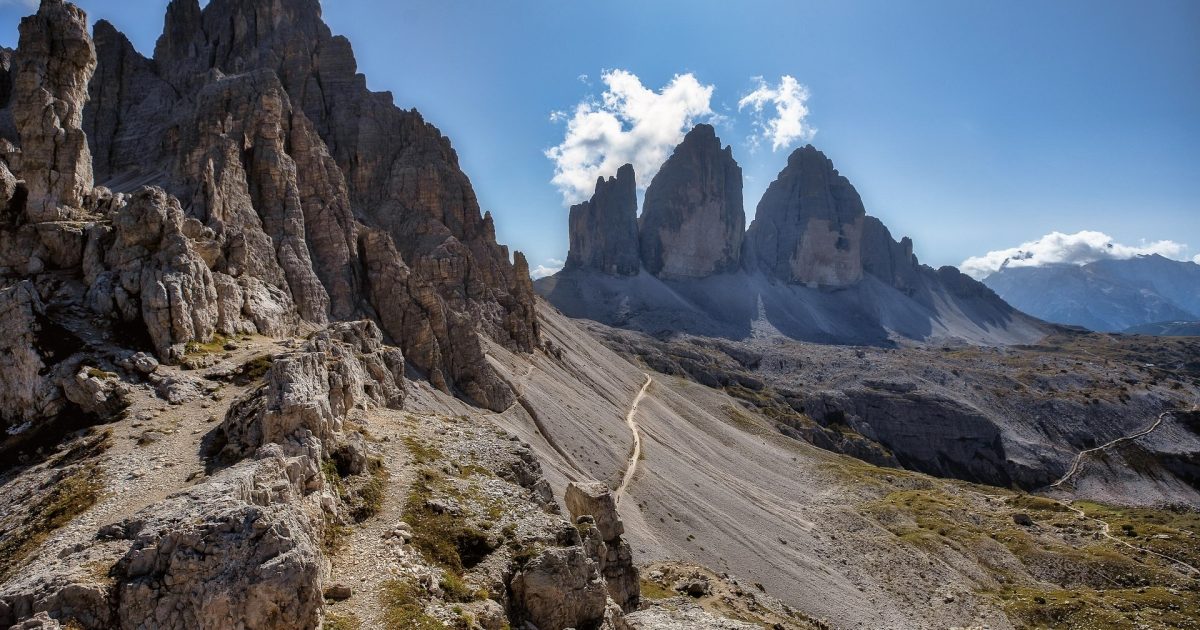
Tre Cime di Lavaredo is one of the most iconic peaks of the Dolomites and offers an unforgettable hike around these monumental rock towers. The ideal starting point is the Rifugio Auronzo we already know, which can be reached by car on the paid mountain road from Misurina or by bus no. 444 (more info in the trips above).
The circular route around Tre Cime is about 10 km with an elevation gain of approximately 400 meters and takes around 4 hours to complete. The trail is moderately difficult, usually easily passable in the summer months and in good weather, but keep in mind that some sections may be rocky and more rugged.
Parking is possible directly at Rifugio Auronzo, if you set off early enough in the morning, as we said above. Yes, you can see that this place is really popular for several trips, and that’s why I’m really not scaring you unnecessarily with that occupancy. Friends recommended that for our next trip to Tre Cime Lavaredo, we get up early for sunrise and spend the night in one of the mountain huts. So maybe we’ll meet here sometime next time, when you set out to travel the Dolomites.
Local mountain huts: Rifugio Auronzo, Rifugio Lavaredo or Rifugio Locatelli
Other accommodation options in Misurina or Cortina d’Ampezzo
Sassolungo
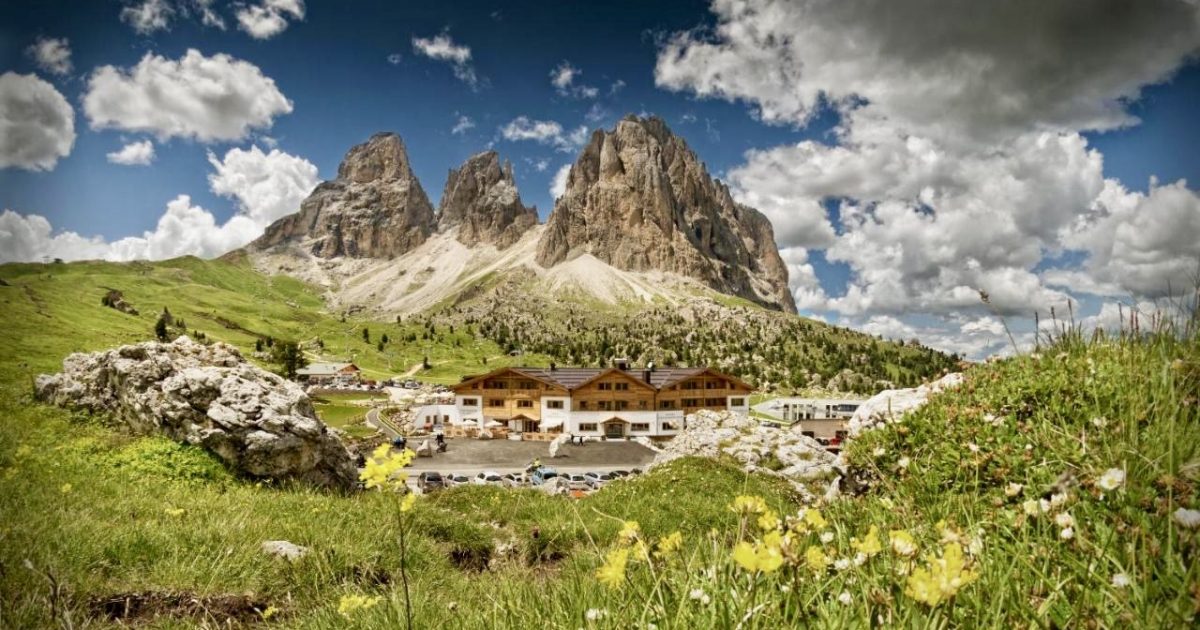
Among the trips in the Dolomites that I recommend not to miss, I must also include the Sassolungo massif. Sassolungo is one of the most imposing peaks of the Dolomites and offers several, variously challenging, beautiful hiking trails. If you visit the Dolomites in winter and have come to love the Sella Ronda experience, just like us, then I certainly don’t need to introduce this place to you anymore. However, what you may not have known is that just as it is beautiful here in winter, you can also enjoy this place in summer.
The ideal starting point is Passo Sella, which can be reached by car or bus from Val Gardena or Canazei. From there, a more challenging circular route leads around the Sassolungo massif, which is approximately 17 km long with an elevation gain of around 800 meters – we personally did not hike it and only took a trip on the cable car – Forcella del Sassolungo, which takes you to a saddle at an altitude of 2,685 m above sea level.
For accommodation, Selva di Val Gardena or Canazei are ideal, where you will find a wide range of hotels, guesthouses and mountain huts. My secret tip is to stay directly in Passo Sella with a view of Sassolungo:
Passo Sella Dolomiti Mountain Resort
Speaking of passes, the Dolomites are really rich in them, so my last three tips for trips in the Dolomites will be devoted to the most beautiful ones for us:
Passo Pordoi Mountain Pass / Trips in Dolomites
Passo Pordoi (2,239 m above sea level) is one of the most famous mountain passes in the Dolomites. It connects the Val di Fassa and Livinallongo valleys. The road is open all year round and free of charge, but may be temporarily closed in winter due to snow. There are several panoramic viewpoints along the way that are worth a stop. Sass Pordoi is popular, where a cable car takes you and from where you can enjoy a breathtaking view of Marmolada, the highest mountain in the Dolomites.
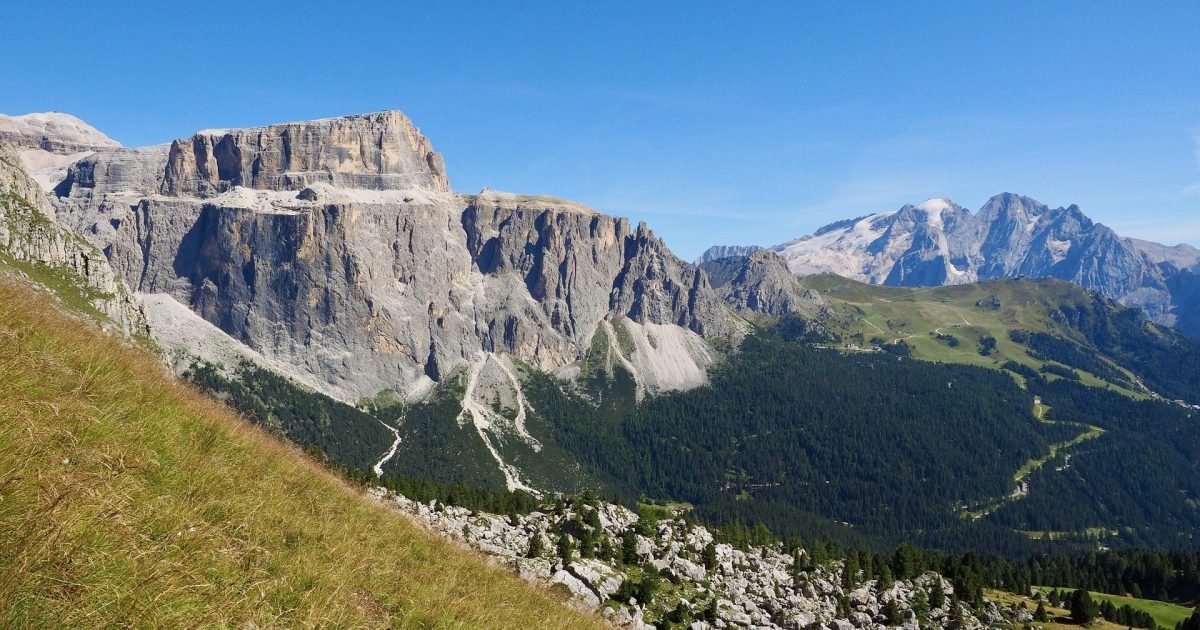
For accommodation, Canazei in the south or Arabba in the north of the pass are ideal, where you will find hotels and cozy mountain huts.
Our verified tip for accommodation in Canazei with an excellent price/quality ratio:
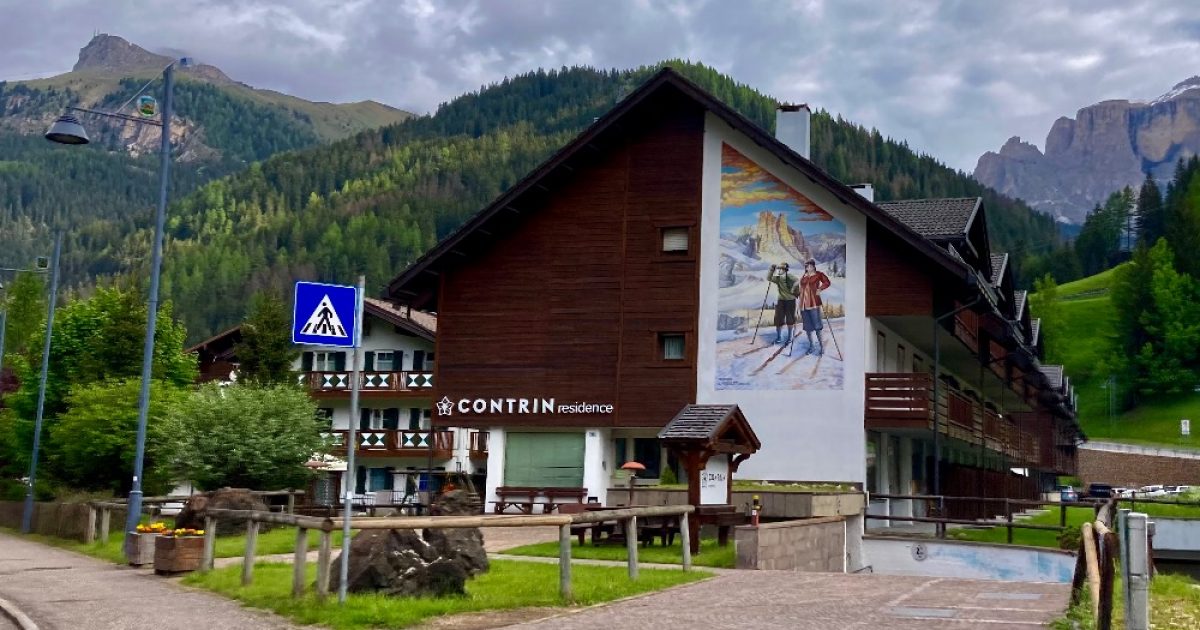
Accommodation in Canazei
Trips in the Dolomites – Passo Gardena / Trips in Dolomites
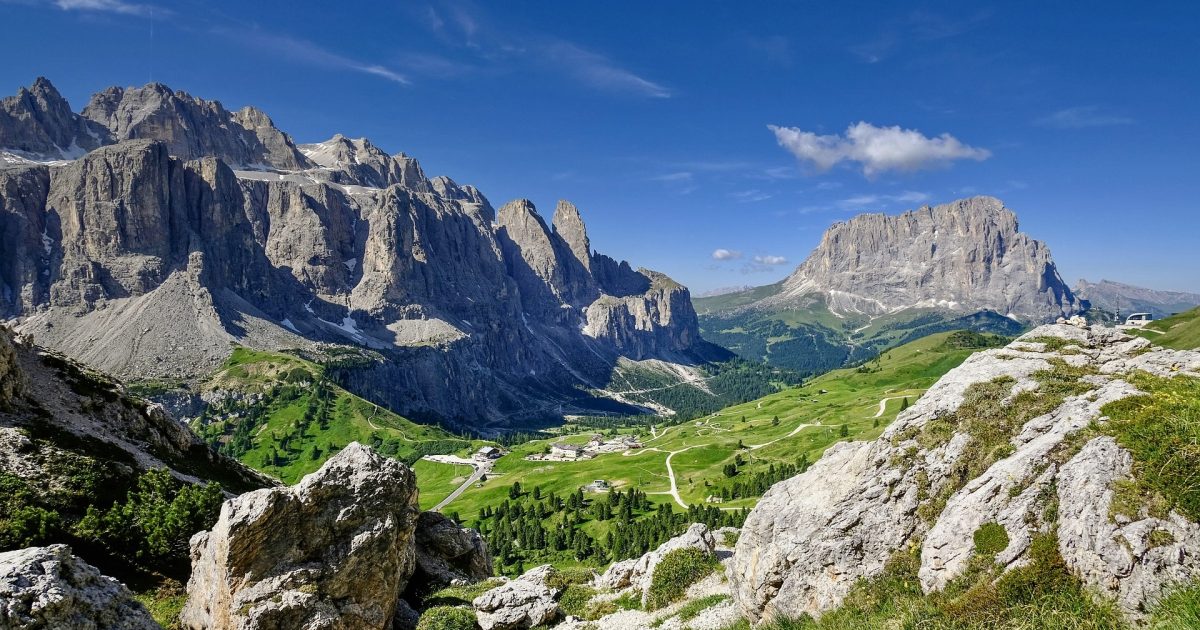
Passo Gardena (2,136 m above sea level) is a picturesque mountain pass in the Dolomites, which connects the Val Gardena and Val Badia valleys and in the summer months attracts you to wander through the green meadows with breathtaking views of the ubiquitous mountain massifs. The road is toll-free all year round, but in the winter months, like other passes, it may be temporarily closed due to snow.
Along the way, breathtaking views open up to the Sella, Sassolungo and Cir massifs, which are among the most photogenic sceneries in the Dolomites. Be sure to stop at the Gardena Pass Viewpoint, from where you can see the entire Val Badia valley. Hiking enthusiasts can set out on less or more challenging trails.
For accommodation, the best choice is the town of Selva di Val Gardena or the village of Colfosco, from where it is only a few minutes’ drive to the pass.
Passo Giau Mountain Pass / Trips in Dolomites
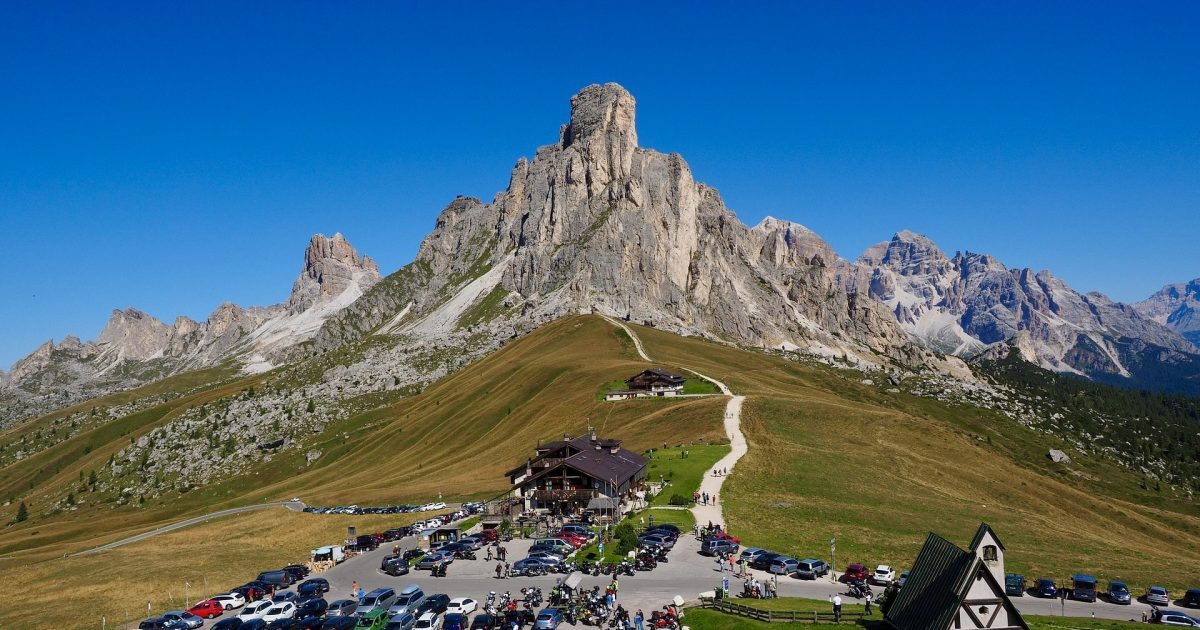
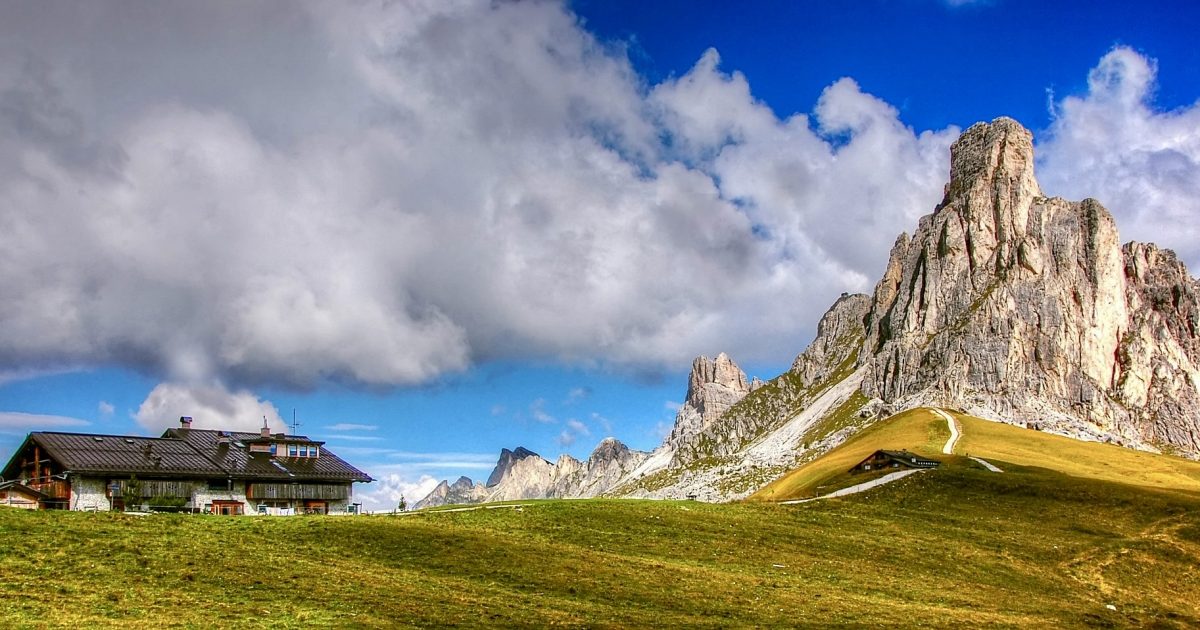
Passo Giau (2,236 m above sea level) is one of the most beautiful mountain passes that the Dolomites boast. It lies between Cortina d’Ampezzo and Selva di Cadore and I would definitely not miss it among the trips in the Dolomites. The road is toll-free and offers a steep serpentine climb with panoramic views of the Tofane, Nuvolau and Monte Averau massifs.
Right at the top of the pass there is a beautiful view of the surrounding peaks, which is definitely worth a visit, as well as a short walk to the Rifugio Nuvolau hut, from where you can enjoy a breathtaking view of Cortina and Marmolada. Mountain bike enthusiasts will appreciate that Passo Giau is one of the most challenging stages of the Giro d’Italia.
Cortina d’Ampezzo is ideal for accommodation – SHOW AVAILABLE ACCOMMODATION HERE
Did you enjoy today’s article with tips for trips in the Dolomites? Then I’ll be happy if you add me to follow on FB, IG and Pinterest: Dovolenkářka / @dovolenkarka
Save the article on Pinterest with tips for Dolomites trips so you can easily find it:


